


The new Common Agricultural Policy (CAP 2028-2034) must become oxygen for living rural communities
OPEN LETTER by Giorgos Karabatos, Executive Director of the Foundation OTR “The Routes of the Olive Tree,” coordinating body of the ANIMA TERRA initiative, and former President of the Chamber of Commerce of Messinia (1998–2011)
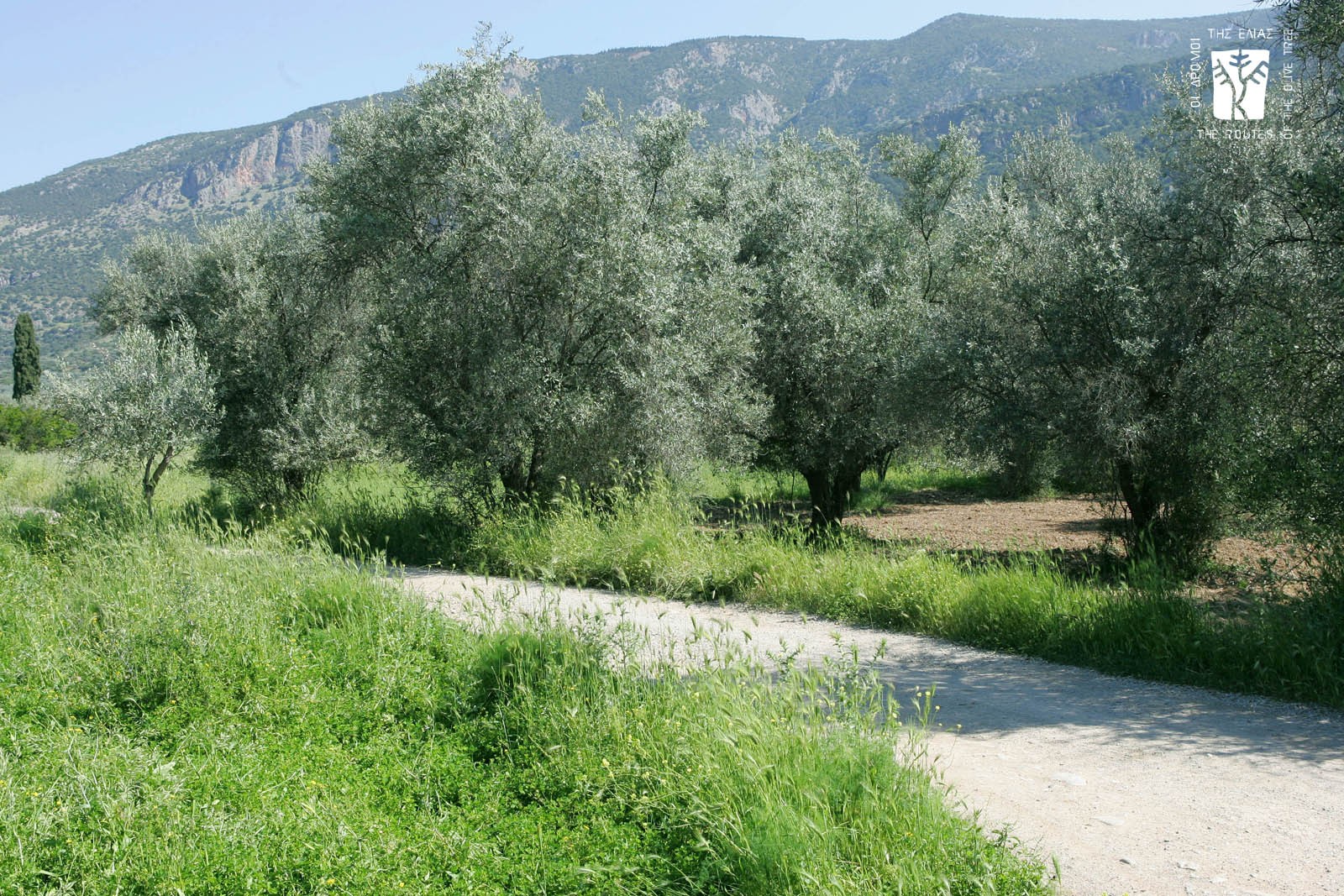
For small villages, supporting production alone is not enough—what is needed is a comprehensive policy of life, permanence, and regeneration.
Europe cannot speak of sustainability, social cohesion, and demographic resilience while quietly allowing its small villages to disappear. It cannot invoke the green transition while hundreds of rural communities, especially those with up to 500 permanent residents, are losing people, services, productive capacity, and ultimately their future.
That is why the next Common Agricultural Policy must take a substantial step forward. It must include a special pillar for small rural communities of up to 500 inhabitants. A CAP not only for production, but for the overall survival and regeneration of the village. A true CAP for living communities.
Because a village is not kept alive by the field alone. It is sustained by an entire web of life: the farmer, but also the café, the small grocery-taverna, small-scale processing, local workshops, the new family choosing to live there, cultural routes, festivals, collective memory, and human presence. The café and the grocery-taverna are not just small businesses. They are social infrastructures. They are spaces of encounter, information, cohesion, and informal care. It is there that the heart of the village still beats.
The new CAP must therefore ensure the conditions for fair and stable income not only for producers, but also for those who keep these vital spaces open. At the same time, it cannot treat all rural areas in the same way. Mechanized lowland agriculture is one thing; manual cultivation of small mountain holdings is another. In many areas, terraces, slopes, dry-stone walls, and difficult access do not allow for heavy machinery or uniform production models. There, production still relies on handwork, experience, and local knowledge. These forms of cultivation are not remnants of the past. They are valuable systems of quality, resilience, and landscape protection.
The new CAP must also support the collective cells of rural life and development: producer groups, local cultural associations, and Local Action Groups such as those of the ANIMA TERRA network. Because without collective organization, there is no real revitalization.
This new CAP must make it attractive for young people to remain in or settle in rural areas: young farmers, family businesses, small processing units, artisans, artists, and other creative professionals.
However, financial tools alone are not enough. Territorial justice in infrastructure is also required. Large energy and telecommunications providers, within the framework of Corporate Social Responsibility, must provide reciprocal benefits to small rural communities. They must support their integration into energy communities, in order to reduce costs for households, farmers, cafés, grocery-tavernas, and small businesses. Likewise, they must guarantee very fast and reliable internet even in the smallest and most remote villages.
Fast internet is not a luxury. It is a prerequisite for staying and returning. It is essential for remote work, new forms of entrepreneurship, access to services, and telemedicine applications that can prove critical for quality of life.
Within this broader need, it is worth noting simply that in some areas, with limited means but strong commitment to place, collaborations are already developing that try to keep communities alive and connect local production with culture. In this spirit moves the ANIMA TERRA initiative, implemented by the Olive Routes on a voluntary basis, together with the chamber community, local communities, and local cultural associations.
The truth is simple: without young people there is no tomorrow. Without fair income there is no permanence. Without a café and a grocery-taverna there is no community. Without culture there is no identity. Without connectivity, affordable energy, and access to healthcare, there is no rural revitalization.
The new CAP must become oxygen for living communities.
Because a village is not only a production unit. It is a unit of life.